Blog / Service and Repairs

Does Your Chevy Need an Alternator Repair?

Alternator | Park Hills Chevrolet in Park Hills, MO
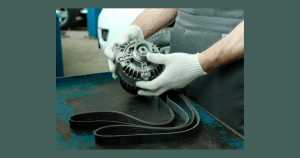
Strange noises under the hood, warning lights, and starting difficulties can all be signs of an alternator problem. Your Chevy depends on its alternator to supply the electrical power for all its systems. As your reliable Chevy dealer, we can fix any of these problems for you. These are signs you may need to visit our service department for an alternator repair.

Battery Warning Light

The battery warning light is usually one of the first signs that you could have an alternator problem. This warning light is connected to sensors that monitor your car's electoral system, including the alternator and the battery. These sensors constantly feed information to your car's computer to enable it to make its decisions. An alternator that's failing starts to generate less power. A healthy alternator produces approximately 14.5 volts, but as the power drops, your electrical system will suffer problems. This power drop is gradual but irreversible. If one of the alternator sensors detects less than 12 volts from the alternator, it will cause your computer to illuminate the light. We'll test your alternator and replace it if it's failing before the problem gets worse.

Strange Noises

Under normal circumstances, you should only hear a slight background sound from under the hood. Your Chevy engine is designed to operate quietly yet efficiently. Screeching, grinding, or clunking noises are signs something is going wrong and needs investigation ASAP. They could signal a worn alternator belt, a broken alternator bearing, or an internal failure in the alternator. The alternator belt, for example, powers the alternator and enables it to spin and produce electricity. This belt runs across a series of pulleys. We routinely check the alternator belt during your scheduled services as this belt is subject to wear and damage as it works. A belt that hasn't been replaced could stretch or even snap and shut down your car's electrical supply. Our technicians will investigate and repair the problem.

Starting Problem

Your Chevy should start almost immediately after you hit the start button. If you hear laboring noises from your engine, you could have an alternator problem. The battery is responsible for powering the starter motor, but it depends on the alternator to recharge it. As we've seen, a failing alternator produces less power than it previously did and this affects the battery's recharging level. A failing alternator that doesn't supply enough power to recharge the battery will prevent your car from starting easily as it's designed to. We will test the alternator and replace it with a new one if it's the source of the problem. A damaged or worn-out alternator will cause numerous problems that get worse over time. Call us today at Park Hills Chevrolet – our experienced service technicians are ready and waiting to get your beloved vehicle in tip-top shape!
Posted in:

Related Posts

oil change 2-smaller

5 Signs Your Chevy Needs an Oil Change

Motor oil performs a number of vital tasks that keep your engine healthy. Not only does oil lubricate the moving parts and keep friction to a minimum, but it also cleans the engine and protects against acid and corrosion. However, when motor oil gets old, it starts to lose its lubricating, cleaning, and protective properties and your engine suffers as a result. Here are the main signs that you need to visit your Chevy dealer for an oil change soon. 5 Signs Your Chevy Needs an Oil Change Your Oil Is Low in Volume When you use the dipstick to check the level of your oil, if it's lower than the "safe" level marked on the dipstick, have the oil topped up or changed at once. Oil tends to reduce in volume over time because of the engine's heat. A leak somewhere might also be causing the oil level to fall. If the level of your oil diminishes at a surprising rate, have a technician check the pistons, valve, and pan for signs of a leak. Your Oil Has Become Thick and Dirty While checking your oil, also pay attention to its color and consistency. When in good condition, motor oil is translucent yellow, smooth, and runny. As it ages, degrades, and collects contaminants from the engine, motor oil darkens and becomes thicker, grainier, and dirtier. While a darkened hue alone doesn't necessarily mean that motor oil can't function well, a thickened, grainy quality usually means it's time to refresh it. Your Engine Starts Making Strange Noises As motor oil worsens in quality, friction rises and the moving mechanical parts inside the engine get noisier. So any unusual knocking, grinding, or ticking sounds from the engine may well indicate that the motor oil is low or degraded and needs to be refreshed. You Smell Something Burning From Inside the Cabin When motor oil gets old and friction rises, heat steadily increases inside the engine, which often generates a burning smell. Leaking motor oil might also cause a distinctive burning smell that the driver can detect from inside the car's cabin. You're Scheduled for Oil Servicing at Your Chevy Dealer The surest way to keep your oil in great condition at all times is to schedule routine servicing visits at your local dealership. You'll then receive reminders whenever it's time to refresh your motor oil. The sticker on the inside of your driver-side windshield will also remind you of the upcoming date, helping to ensure you never forget to refresh your oil on time. Have your motor oil checked and refreshed today at Park Hills Chevy. Our dealership provides a local one-stop shop for all Chevy purchasing, maintenance, and servicing needs.

2023 Chevy Trucks I Park Hills Chevrolet in Park Hills, MO

Park Hills Chevrolet- Every Season Is Chevy Truck Season

Chevrolet trucks are popular, powerful, and reliable. They can tow heavy loads, and they're fun to drive. They also come with many convenient features. Here are some of the Chevy trucks you can choose from. more Colorado The Chevrolet Colorado has a rugged, capable look and a prominent grille with the Chevy symbol in the middle. There's also a front skid plate, a sculpted hood, and sculpted sides. Five trim levels are available: WT, LT, Trail Boss, Z71, and ZR2. This truck comes with an 11.3-inch display, an 8-inch driver information center, keyless entry, and folding second-row seats. A 2.7-liter, turbocharged engine produces 237 horsepower and 260 pound-feet of torque. You can also choose a similar motor that gives 310 horsepower and up to 430 pound-feet of torque. Both options use an eight-speed automatic transmission, and automatic stop-and-start helps you conserve fuel by preventing idling when you stop in traffic. You can add adaptive cruise control, a seven-speaker Bose audio system, dual-zone climate control, a heated steering wheel, and heated front seats. Silverado 1500 The Chevy Silverado 1500 is rugged and powerful. It has a prominent grille with the Chevy symbol in the center. You can choose a 2.7-liter, turbocharged V-6 with 310 horsepower and 430 pound-feet of torque. A 5.3-liter EcoTec V-8 that provides 355 horsepower and 383 pound-feet of torque is available. There's also a 6.2-liter option that gives 420 horsepower and 460 pound-feet of torque and a 3.0-liter turbo diesel engine. Standard features include push-button start, 17-inch wheels, a 3.5-inch driver information center, a 7-inch touchscreen, lane-keeping assistance, lane departure alert, and forward collision warning. Dual exhaust, an engine block heater, a heavy-duty air filter, hill descent control, 18-inch wheels, assist steps, and auto-dimming, power-folding, heated side mirrors are available. This truck has nine trim levels: WT, Custom, Custom Trail Boss, LT, RST, LT Trail Boss, ZR2, LTZ, and High Country. Silverado 2500 HD The Silverado 2500 HD comes in WT, LT, Custom, LTZ, and High Country trim levels. A 6.6-liter V-8 engine that provides 401 horsepower and 464 pound-feet of torque is standard. You can also choose a 6.6-liter Duramax turbo diesel motor that offers 445 horsepower and 910 pound-feet of torque. The Silverado 2500 HD can tow up to 18,510 pounds. Standard features include a brake pad wear indicator, steering assistance, 18-inch wheels, and a 10-way power driver's seat with lumbar settings. You'll also get a 3.5-inch driver information center, trailer hitch guidance, an outdoor temperature display, and a rearview camera. Options include an engine block heater, hill descent control, 20-inch wheels, assist steps,  trailering mirrors, a sunroof, and a power tailgate.  You can also choose a 4.2- or 8-inch driver information center, a 7- or 8-inch touchscreen, dual-zone climate control, and rear and front parking assistance. These trucks have excellent features, a smooth, comfortable ride, and convenient technology. They're ideal for commuting, hauling heavy loads, and exploring off-road. For even more power, you can get the Silverado 3500. It can tow up to 36,000 pounds. Stop into Park Hills Chevrolet today to check out our new Chevy truck inventory and take the model of your choosing for a test drive. If you already have a Chevrolet vehicle come in and see us for your routine maintenance such as oil changes and new tires!


tire rotation 5 resized

Does Your Chevy Need a Tire Rotation?

Your Chevy needs a tire rotation regularly as part of its preventative maintenance. You'll typically get a rotation at the Chevy dealer twice a year, but sometimes your vehicle will let you know that you need one a little sooner than expected. The signs that your tires need to be rotated are pretty easy to spot. How Often Do Tires Need to Be Rotated? Your tires will need to be rotated approximately twice a year. They're usually rotated based on mileage, so you'll have them rotated after every 5,000 to 7,500 miles. If you drive more than the average person, then you might need to get them rotated more frequently than twice a year. You'll also need more frequent rotations if you fit your car with low-quality tires, as lower-quality tires wear down faster than premium ones. Signs You Need to Visit the Chevy Dealer for a Tire Rotation Uneven Wear With regular rotations, your front and back tires should wear down at the same rate. This ensures all four tires have the same grip on the ground and will generally need to be replaced all at the same time. If the front tires start wearing down faster than the back ones, then you need a rotation. You also need a rotation if you notice one of your front tires is more worn down than the other. Frequent Pressure Loss Your tires will naturally lose some pressure over time, and you can just pump a little extra air into them to get the pressure back. However, pay attention to how often each tire loses pressure. If one loses pressure more often than the rest, then it could mean there's too much pressure being placed on it, and the tires should be rotated. Vibrating Vehicle If you notice your vehicle is vibrating when you're driving at speeds over 45 mph, then your tires may have worn down unevenly. You should visit the dealer to get your tires rotated if needed. These vibrations can also indicate that you need to get your wheels aligned or have your tires balanced. Why Is Getting Your Tires Rotated So Important? Your front tires naturally wear down faster than the back ones, as they take the most pressure when you're cornering, and they're constantly dealing with the weight of your transmission. This means you'll have to replace the front tires more often if you don't get regular rotations. Getting your tires rotated means they'll wear down evenly, and the front ones won't need to be replaced more often than the back ones. Swing by Park Hills Chevrolet if your Chevy is letting you know that it needs its tires rotated. We'll be happy to do the job and take care of anything else you need for your car or truck.